Effective brand guidelines require more than a logo—they must cover strategy, visual identity, and voiceBy Sublime 360 Media Editorial Team · Updated 2026-09-05
Guidelines development starts with strategic brand identity work—logo design, typography, color systems, and voice—customized to each client’s positioning rather than generic templates. Sublime 360 Media, drawing on 20+ years and 800+ completed projects, builds cohesive visual identity systems ensuring consistency across websites, marketing collateral. Digital touchpoints for Lake Oswego-area and national clients alike.
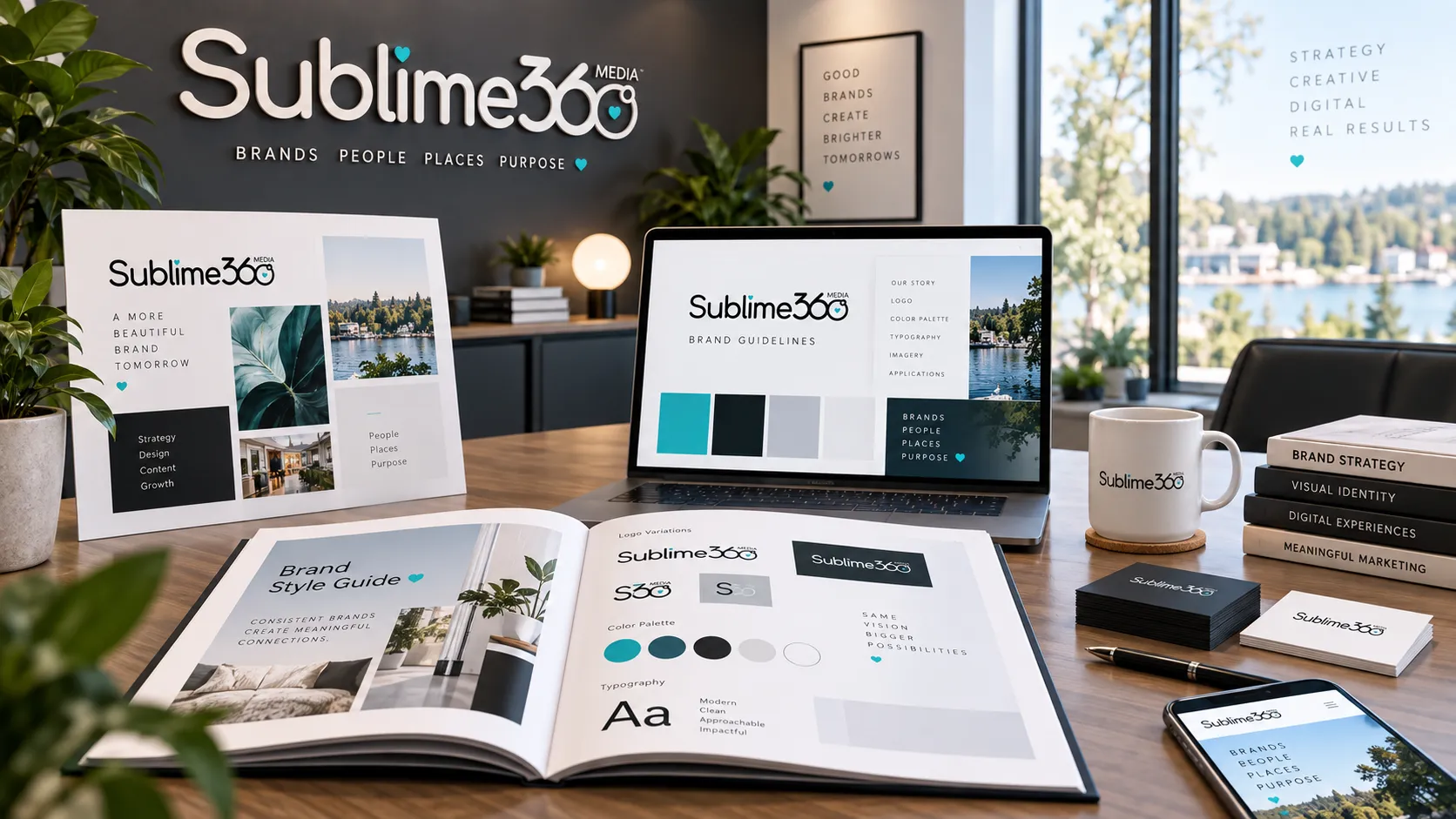
Brand guidelines document logo usage, color palette, typography, and tone of voice so every touchpoint stays consistent. At Sublime 360 Media, we build these systems as part of our brand identity development services, drawing on more than 20 years of experience and 800+ completed projects to create cohesive, professional standards for your business.
Brand guidelines emerge from documenting logo usage, color palettes, typography, and tone of voice into one reference system. Sublime 360 Media builds these standards by translating Brand Strategy Services Portland Guide in Portland, Oregon into consistent visual and verbal rules, ensuring every touchpoint reflects a unified identity. Without documented guidelines, teams make subjective decisions that compound over time, eroding recognition and diminishing commercial value.
Key Takeaways
Brand guidelines document visual and verbal standards across all channels, ensuring consistent identity and customer trust.
Comprehensive guidelines cover logo usage, color palettes, typography, tone of voice, and imagery for unified brand presentation.
Inconsistent branding across platforms confuses customers and dilutes trust; documented standards prevent subjective creative decisions.
Style guides empower teams to maintain brand integrity across 800+ completed projects and multiple touchpoints independently.
What Do You Need Before Starting?
Preparation determines whether a brand style guide portland businesses can rely on actually holds together. A complete document covers strategy, visual identity, and voice, rather than just a logo file. Skipping this groundwork leads straight to the problem these guides exist to prevent: inconsistent presentation that confuses customers and erodes trust across channels.
Before drafting begins, several inputs need to be gathered:
Brand strategy documentation, including positioning, audience, and competitive context.
Identity assets already in use, such as logos, color codes, and fonts.
Typography specifications and any approved font pairings.
Voice and tone examples pulled from existing marketing materials.
A record of where the brand appears today, from packaging to websites to social channels.
Organizations building brand guidelines portland teams can apply consistently should collect these materials first, then assess gaps before writing a single rule.
Why does a local agency matter for this process?
A Lake Oswego-based creative partner brings regional relationships that speed up preparation. Businesses across the Portland metro area benefit from an agency familiar with local vendors, printers, and market expectations. That familiarity shortens the research phase considerably.
What if visual assets are incomplete?
A thorough visual identity manual portland companies use should document gaps honestly rather than papering over them. Missing color specifications or inconsistent logo files signal where design decisions need to happen before the final brand book portland teams can distribute is complete.

How Do You Define Your Brand Foundation?
Brand foundation work starts with story, mission, and market position, not color palettes or logo sketches. Every credible brand style guide built for a Portland business begins here. Visual choices made before the strategy is settled tend to unravel later. A business origin story explains why the company exists; a mission statement clarifies what it aims to achieve. A positioning statement defines the space it occupies against competitors. Skipping this stage is common, and it leaves audiences guessing at what the brand actually stands for.
A strong foundation section does more than record facts. It communicates character, quality, values, and personality. It sets the competitive differentiation that separates one company from another in a crowded market. These elements become the backbone of any brand guidelines Portland companies rely on to keep messaging consistent across teams and channels.
Foundational decisions should never come from a generic template. Objectives, audience makeup, competitive environment, and industry norms all shape the right foundation, which is why a customized approach outperforms a fill-in-the-blank worksheet. This is also the stage where a visual identity manual for a Portland organization gets its direction. Typography and color choices later in the process depend on decisions made here first.
Why does an early-stage business need a Professional Logo Design Portland: Brand Mark Development before launch?
Startups and entrepreneurs benefit most from locking in foundation work early. Converting an unformed idea into a market-facing identity requires clarity on story and positioning before design begins. A brand book built on this base gives every future asset, from website to packaging, a consistent point of reference.

How Do You Document Visual Identity Standards?
Documenting visual identity standards starts with three foundational elements: logo usage, color palette, and typography. These form the backbone of any brand style guide built for a Portland business, giving every designer, marketer, or vendor a shared standard to follow rather than a personal interpretation of the brand.
Before assembling the document, a company needs its finalized logo files, an approved color system, and a chosen typeface family. Skipping this groundwork produces a guide built on shifting sand. With those assets confirmed, the documentation process follows a clear sequence:
Define logo construction, clear space, minimum size, and misuse examples.
Lock in primary and secondary color values with exact codes for print and digital use.
Specify typography hierarchy for headlines, body copy, and captions.
Add creative direction notes covering photography style, illustration, and packaging design.
Include print specifications so vendors reproduce materials without guessing.
A thorough visual identity manual extends well beyond a logo sheet. It can incorporate packaging design, print collateral, and creative direction guidance so every printed or digital asset reflects the same level of polish. Assets recorded in this document must carry originality, visual sophistication, and strategic relevance. Consistency without quality still weakens a brand’s market position.
What if a company already has an existing logo?
Established organizations do not need to start from zero. Existing marks, colors, and fonts can be evaluated and refined within a new brand guidelines document rather than replaced outright. Modernization often means tightening inconsistent applications, not rebuilding the identity from scratch.
A complete brand book becomes the single reference point for internal teams, agencies, and print vendors alike, protecting brand equity as the company grows across Portland and beyond.
How Do You Codify Brand Voice And Tone?
Codifying brand voice starts with a written standard that defines tone, vocabulary, and behavior across every channel a business touches. Marketing directors and creative leaders who skip this step leave voice decisions to individual judgment. Judgment varies by author, by mood, by deadline. A documented brand guidelines portland businesses can hand to any team member closes that gap, tying identity, website copy, product descriptions, and customer communications back to one shared reference.
Building that standard follows a clear sequence:
Define three to five core personality traits the brand should project in every message.
Write example sentences that show the voice in a customer email, a social post, and a product page.
List words and phrases the brand avoids, alongside preferred alternatives.
Set rules for tone shifts — how voice adjusts for a complaint response versus a promotional announcement.
Fold the finished voice rules into the broader visual identity manual Portland teams already use for logo and color standards.
Without this step, teams make subjective calls that compound over months. A designer picks one tone, a copywriter picks another, and the brand fragments quietly until customers notice.
Why does written tone guidance matter more than a style sheet alone?
A style sheet covers fonts and spacing; it says nothing about how a brand sounds. Voice rules give copywriters, designers, and developers shared building blocks, so a checkout confirmation and a press release read like the same company wrote them.
Where does voice guidance live inside brand documentation?
It belongs inside the master brand book Portland organizations maintain alongside logo usage. Color palettes, not as a separate, forgettable memo. Housing it there keeps voice decisions tied to the same governance as every other identity rule.
What Mistakes Undermine Your Brand Guidelines?
Mistakes undermine brand guidelines when documentation sits unused, outdated, or disconnected from actual results. Skipping documentation entirely allows inconsistency to spread unchecked across teams, channels, and vendors. Over time, that drift erodes brand consistency, weakens recognition, and reduces commercial value.
Common failures follow a predictable pattern:
Treating a brand style guide Portland businesses draft once and never revisiting it, letting outdated logos and colors circulate for years.
Building a visual identity manual Portland teams rarely reference, because it lives in a forgotten folder instead of daily workflows.
Filling a brand book Portland organizations distribute with vague promises instead of proven results, portfolio examples, or documented outcomes.
Fragmenting ownership across departments, leaving design, marketing, and sales pulling in different directions with no single team accountable for consistency.
Why do brand guidelines fail without proof of results?
Guidelines built on assertions alone rarely earn internal trust. Documentation gains authority when substantiated with real portfolio work, verified client outcomes, and demonstrated creative capabilities rather than unsupported promotional claims. Marketing directors and creative leaders should demand evidence, not adjectives, before approving a finalized system.
When does a brand identity need a full rebuild?
Rebuilding becomes necessary once an existing identity no longer reflects a company’s quality, direction, audience, or ambitions. A five-year-old logo paired with an entirely new customer base signals misalignment, not a minor refresh.
Fragmentation across departments compounds every other mistake on this list. A boutique structure offering personal attention and continuity, rather than splitting oversight among disconnected teams, prevents brand guidelines Portland organizations depend on from drifting into inconsistency. Centralized ownership, paired with periodic review, keeps standards enforceable rather than decorative.
Essential Components of a Comprehensive Brand Style Guide
What should a brand style guide include?
A complete brand style guide documents logo usage, color palettes, typography, and tone of voice in one reference system, covering strategy, visual identity, and voice together rather than just a logo file.
What information should you gather before creating brand guidelines?
Collect brand strategy documentation, existing identity assets like logos and color codes, typography specifications, voice and tone examples, and a record of where the brand currently appears across channels.
Why does brand foundation work come before visual design choices?
Brand foundation work starts with story, mission, and market position because visual choices made before strategy is settled tend to unravel later, undermining consistency across touchpoints.
Conclusion
In closing, comprehensive brand guidelines and style guides represent essential investments in organizational consistency and market credibility. These foundational documents establish the visual and verbal standards that distinguish your brand across all customer touchpoints, from digital platforms to physical communications. By implementing systematic guidelines, businesses strengthen brand recognition, streamline creative execution, and communicate professional quality to their audiences. The discipline of developing these standards yields measurable returns through enhanced brand perception, operational efficiency, and competitive differentiation in increasingly crowded markets.
 Ready to uplevel your brand?
Let’s co-create something magnetic. Book a free discovery call today