By Sublime 360 Media Editorial Team · Updated 2026-08-21
A technical SEO audit checklist covers crawlability, indexability, site speed, mobile usability, structured data, XML sitemaps, broken links, HTTPS security, and duplicate content. Fixes include correcting crawl errors, optimizing Core Web Vitals, resolving canonical issues, and updating robots.txt. These foundations determine whether search engines and AI systems like AI Overviews properly access, index, and surface site content.
Essential Technical SEO Audit Takeaways
Technical SEO foundations determine whether search engines and AI systems crawl, understand, and index your website content.
Crawlability and indexability issues prevent content from ranking in organic search results and AI-powered LLM responses.
Website performance directly impacts both search rankings and user experience across all visitor touchpoints.
Schema markup implementation in 2026 establishes structured data that search engines use to understand content context.
What Do You Need Before a Technical SEO Audit?
A technical SEO audit Portland businesses can trust starts with clarity, not crawling tools. Business owners must define what the website is supposed to accomplish before any diagnostic work begins. A site should function as both a strategic business asset and a design showcase. That distinction shapes every decision made during the audit process.
Preparation matters just as much as execution. Unresolved technical issues can block a site from being crawled, indexed, or surfaced in search results altogether, regardless of how strong the content looks. Waiting to fix these problems after a marketing push wastes budget and delays results.
What should be reviewed before technical fixes begin?
Site owners should confirm the site communicates clearly what the company does and directs visitors toward a next step, such as a call, form, or purchase. Messaging clarity and calls to action are foundational, not cosmetic details.
What goals should guide the audit?
Audit priorities should center on qualified inquiries and conversions, not raw traffic counts. A site with 10,000 unqualified visitors delivers less value than one with 500 ready-to-buy prospects. Effective seo audit services portland teams typically confirm the following before diagnostics start:
Documented business goals and target customer profile
Full access to analytics, hosting, and CMS platforms
Agreement on what success looks like beyond traffic volume
These fundamentals ensure the eventual seo technical fixes portland teams recommend align with real business outcomes rather than isolated technical checkboxes.
How Do You Audit Crawlability and Indexing First?
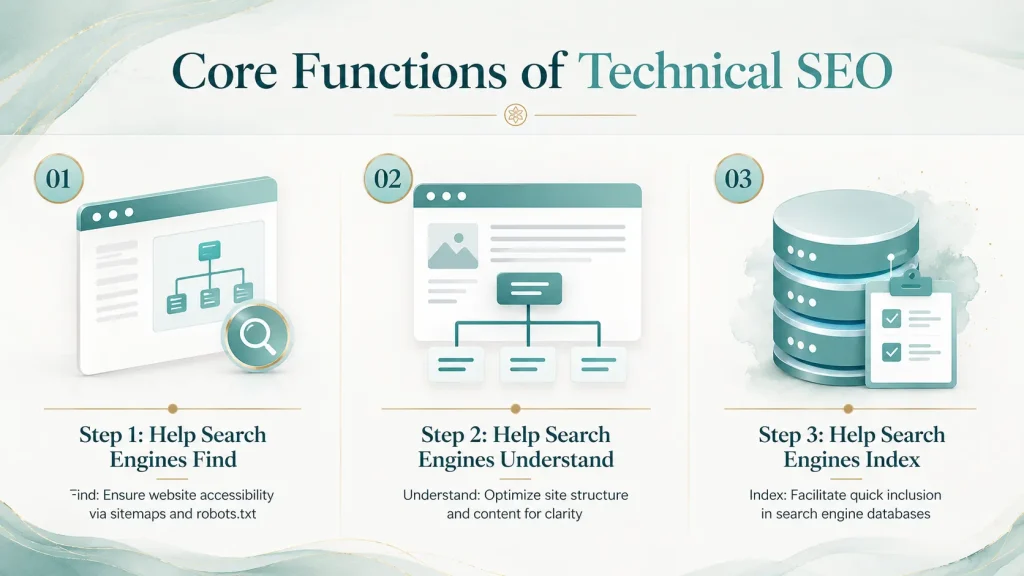
Crawlability and indexing form the starting point of any technical seo audit portland businesses commission. Search engines cannot rank pages they never find or process. Technical SEO exists to help search engines find, understand, and index a website’s content. Without that foundation, every other optimization effort loses value. Before running an audit, a site owner needs access to server logs, a current sitemap, and crawl reports from Google Search Console.
With those materials ready, the audit follows a fixed sequence:
Pull a full crawl report to map every indexed and non-indexed URL on the domain.
Check server response codes across all pages, since Google now clarifies that pages returning 4xx or 5xx status codes may be excluded entirely from its rendering queue.
Compare the sitemap against the crawl report to catch orphaned pages or blocked directories in robots.txt.
Review indexed pages for local relevance, confirming that service and location pages strengthen visibility for community-specific searches tied to the business’s market.
Cross-reference findings against broader SEO components, since a thorough review treats search visibility, local search performance, and site optimization as connected systems rather than separate checklist items.
Why Do Rendering Errors Matter More in 2026?
Rendering errors now carry heavier consequences because non-200 status codes can remove a page from consideration before content is ever evaluated. A page that loads fine for a visitor may still fail silently for a crawler, making server-response monitoring a recurring task rather than a one-time fix.
Firms offering SEO audit services Portland businesses trust typically treat crawlability and indexing as the diagnostic layer beneath every other recommendation. Once that layer is stable, teams can move confidently into SEO technical fixes Portland organizations need to resolve deeper structural and performance issues.

How Do You Fix Site Speed and Vitals?
Fixing site speed and Core Web Vitals starts with treating performance as a business function, not a technical afterthought. A technical SEO audit Portland businesses commission typically uncovers the same culprits: bloated images, unoptimized code, and unstable layout shifts. Organic search still drives over 53% of all website traffic, according to BrightEdge data cited in the 2026 SERP visibility checklist, so slow or unstable pages carry a measurable cost in lost visitors and abandoned transactions.
Performance repairs follow a logical sequence once diagnosed:
Compress and resize images before upload to reduce page weight.
Eliminate render-blocking scripts and defer non-critical JavaScript.
Reserve space for ads, embeds, and images to prevent layout shift.
Enable browser caching and a content delivery network for faster load times.
Test mobile load speed separately, since mobile behavior often differs from desktop.
Stable indexation and predictable site architecture matter beyond raw speed scores. Clean crawl paths and consistent structure shape how search engines and generative AI systems interpret a brand’s identity online. A slow, disorganized site sends the wrong signal to both audiences.
Why does a technical SEO audit matter for site speed?
An audit surfaces the exact files, scripts, and design choices dragging down load times, rather than guessing at fixes. Comprehensive SEO audit services Portland teams provide typically pair speed diagnostics with indexation and crawlability review, since these issues compound.
Effective SEO technical fixes Portland businesses need should reflect their actual audience, service mix, and customer journey rather than a generic template applied across unrelated industries. A retail site and a professional services firm face different performance priorities, and repairs should be built accordingly.
How Do You Prepare Your Site for AI Search?
Site preparation for AI search starts with the technical foundations that determine whether AI systems can access. Use a site’s content in generated responses. Crawlability, clean indexation, and structured data now decide whether a business appears inside an AI-generated answer or disappears from it entirely. Lake Oswego and Portland-area businesses face measurable stakes here: a site that passes a traditional crawler check no longer guarantees inclusion in AI Overviews or LLM-generated summaries. Sites showing up in AI Overviews must be technically sound for AI search specifically, not merely clean by older crawler standards.
A structured technical seo audit portland business owners can trust evaluates these exact requirements before content strategy or marketing tactics take priority. Skipping this step risks building a campaign on a foundation AI systems cannot even read.
Professional seo audit services portland companies use should map crawl paths, confirm indexation status, and verify structured data across every priority page. This process reveals gaps a routine site check often misses, particularly around content AI systems attempt to extract and cite directly in responses.
What Technical Fixes Matter Most for AI Visibility?
Priority seo technical fixes portland organizations need typically address structured data accuracy, page speed, mobile rendering, and crawl accessibility first. These four areas most directly influence whether AI models retrieve complete, accurate content from a given page rather than an outdated or partial version.
Should AI Readiness Work Stand Alone or Connect to Broader Strategy?
Technical and AI-readiness fixes should align with actual business objectives, not become disconnected, one-off tactics performed for their own sake. Effective SEO work supports both local relevance and broader organic visibility across the sites feeding AI answers, tying technical repairs to branding, content, and growth strategy instead of isolated maintenance.
What Mistakes Should You Avoid After the Audit?
Treating an audit report as a finished product, rather than a working document, ranks among the costliest mistakes businesses make. Findings from a technical SEO audit Portland teams commission mean little without follow-through, and follow-through means little without proof. Audit results should be validated against demonstrated project outcomes rather than accepted on the basis of promotional claims alone. A firm that cannot point to real project history offers assumptions, not evidence.
Skipping vendor experience is another common error. Platforms change, crawlers change, and ranking factors shift with little warning. Extensive experience across changing platforms and technologies helps catch fixes that a single, one-time audit review might miss entirely. Businesses that rely on a narrow or outdated skill set risk repeating the same errors within months.
Why Do Technical SEO Problems Keep Coming Back?
Sites rarely stay fixed on their own. Ongoing site changes and routine developer updates turn technical SEO into a recurring performance risk if no one manages it after launch. New pages get added, plugins update, and templates change without anyone checking the downstream effect on crawlability or indexing.
Should a Business Handle Fixes One Issue at a Time?
No. Reliable SEO audit services Portland companies use apply structure, not spot-checks. A structured checklist reduces risk by standardizing decisions across an entire site, rather than tracking a scattered list of isolated tasks. Common post-audit mistakes include:
Fixing symptoms (broken links, slow pages) without addressing root causes.
Assigning SEO technical fixes Portland teams need to developers without a prioritized, standardized rollout plan.
Failing to re-audit after major site updates.
Ignoring vendor track record when selecting who performs the work.
FAQ
What should a business confirm before starting a technical SEO audit?
Confirm documented business goals, target customer profiles, and full access to analytics, hosting, and CMS platforms. Agreement on what success looks like beyond traffic volume ensures fixes align with real business outcomes.
Why does crawlability come first in a technical SEO audit?
Search engines cannot rank pages they never find or process. Crawl reports, sitemaps, and server response codes get reviewed first. Pages returning 4xx or 5xx status codes risk exclusion from Google’s rendering queue entirely.
What technical issues does the audit checklist cover?
The checklist covers crawlability, indexability, site speed, mobile usability, structured data, XML sitemaps, broken links, HTTPS security, and duplicate content. Fixes include correcting crawl errors, optimizing Core Web Vitals, and resolving canonical issues.
Conclusion
In closing, a comprehensive technical SEO audit and systematic remediation of identified issues establish the foundation for sustained organic visibility and search performance. The checklist approach ensures that critical technical elements—from site architecture. Crawlability to mobile responsiveness and page speed—receive appropriate attention and verification. Organizations that prioritize technical SEO optimization position their websites as credible, accessible resources that search engines reward with improved rankings, ultimately supporting qualified traffic acquisition and measurable business growth.
 Ready to uplevel your online business?
Let’s co-create something magnetic. Book a free discovery call today